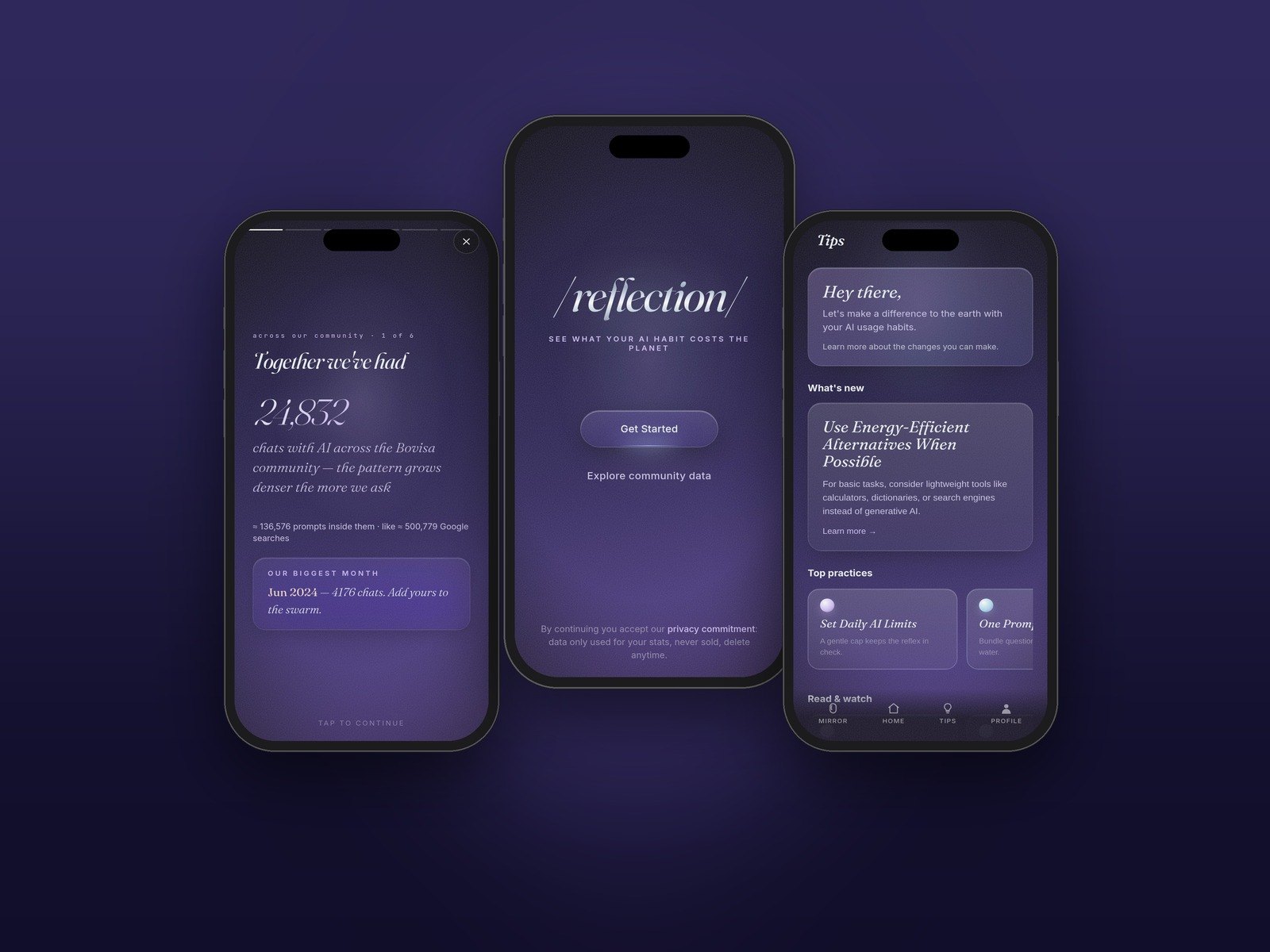
The environmental cost of everyday AI chats is invisible, so nobody changes anything.
Design system, motion, copywriting and a fully interactive prototype.
A working prototype with 46 screens that turns numbers into things you can feel — and share.
Every answer from an AI costs a little water for cooling, some electricity and some carbon — but that cost lives in reports nobody reads. The brief I set myself: make it personal and honest, without shaming anyone into switching AI off.
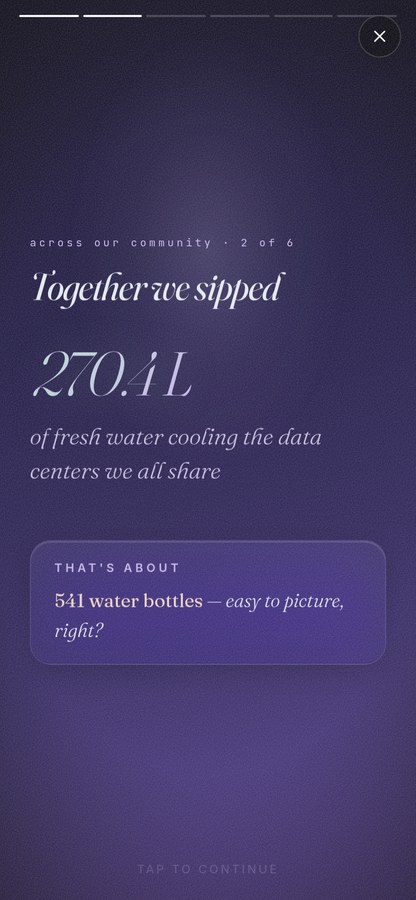
The app reads a ChatGPT, Claude or Gemini export on the phone, estimates the water, energy and CO₂ behind it, and then — instead of a dashboard — tells it as a story with a pause between the numbers.
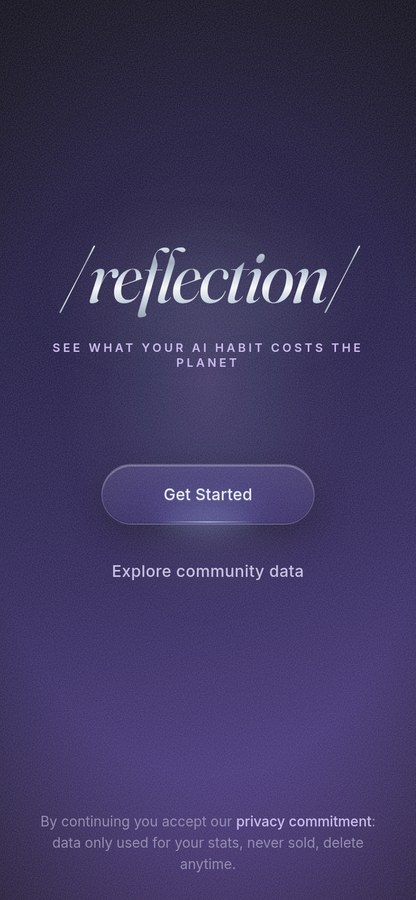
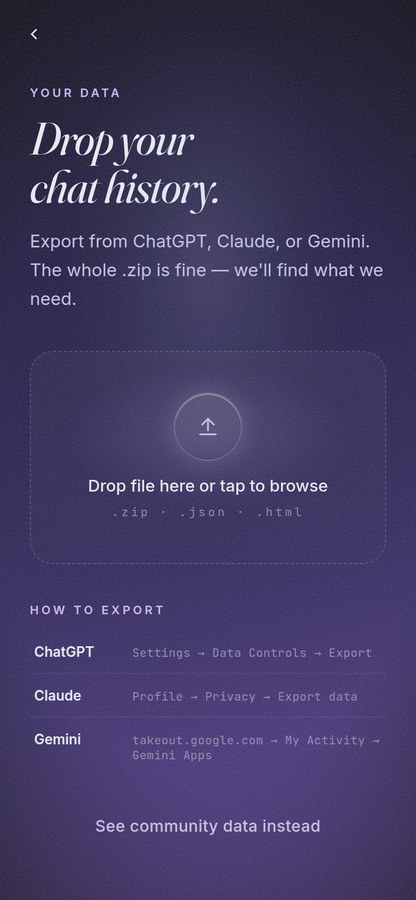
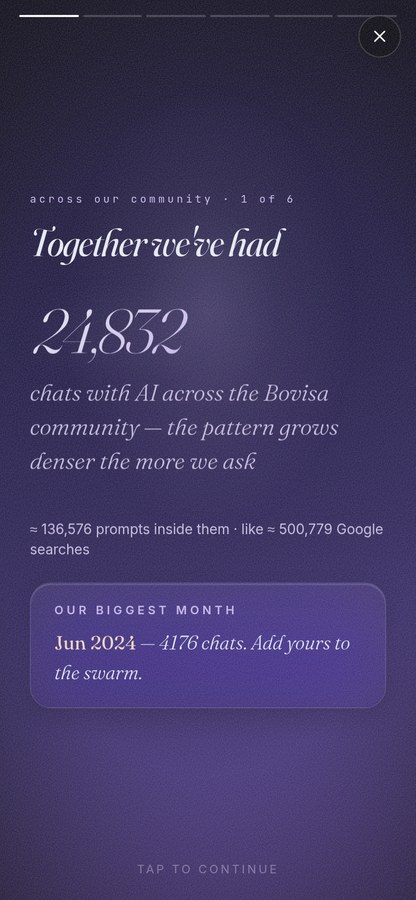
Deep violet, an editorial serif for the story voice, soft glass surfaces. Every number gets a “like…” translation — bottles of water, phone charges, kilometres by car — because those are the units people can picture.
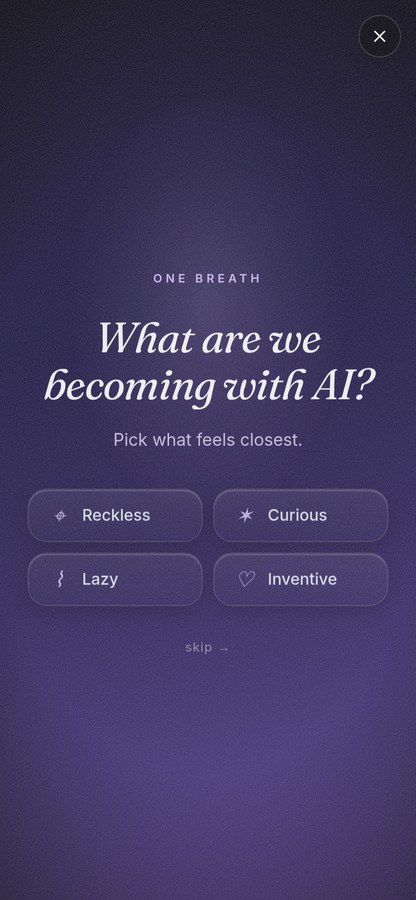
Between the data screens the app asks a question and waits. No right answer; the pause is the point.
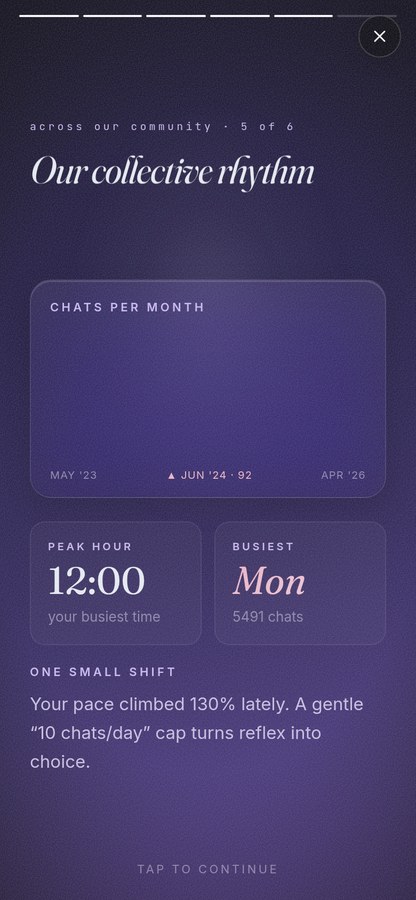
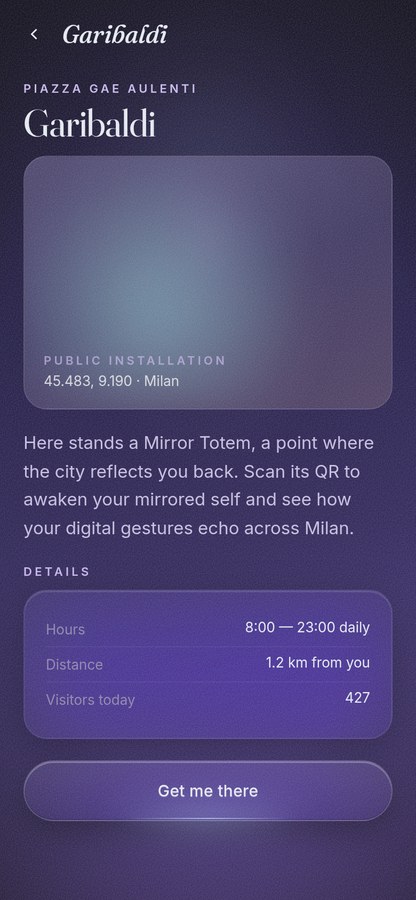
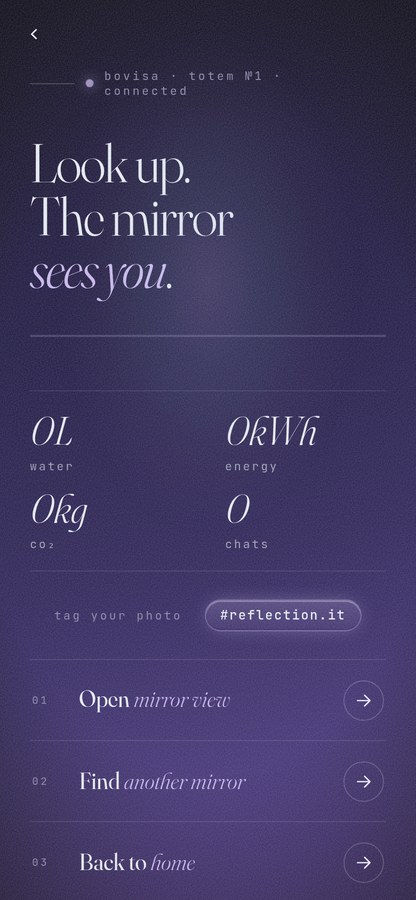
Usage grows into a generative mosaic — a self-portrait built from chats. You can save it, share it, or compare it with the community. Reflection Mirrors take the idea into public space: scan a totem and your reflection appears on a screen for strangers to see.
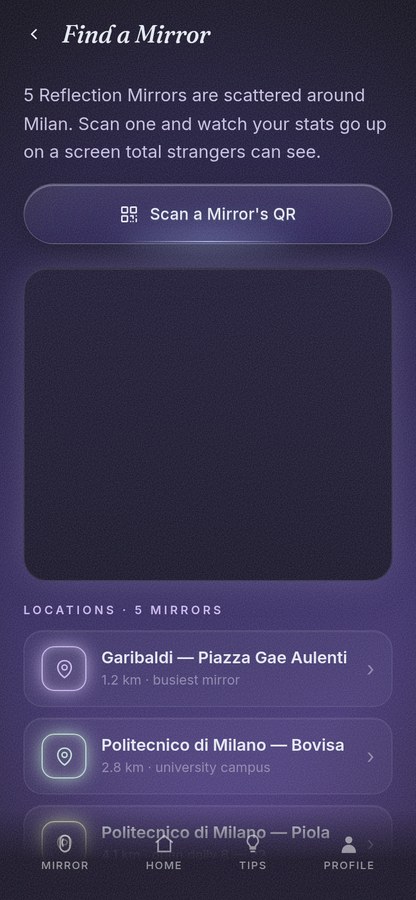
Design system, motion, copywriting and a fully interactive prototype built end-to-end: 46 screens, community data, sharing, privacy-first settings (data deleted after analysis by default) and language support prepared for six languages.